
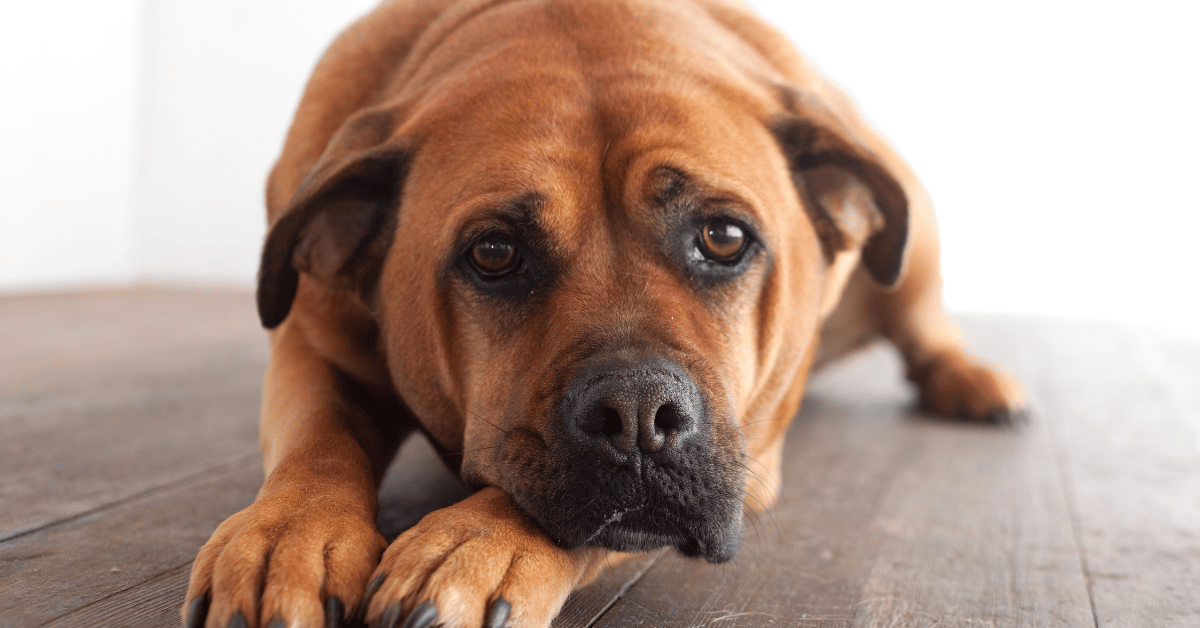
Most dogs have a bowel movement one to two times a day, on a schedule you could set a watch by. So when your dog squats, strains, and produces nothing — twice, three times, on the same walk — it gets your attention fast.
Dog constipation is common, and a good share of cases resolve with more water, more movement, and a small diet adjustment. But constipation is also one of the more misleading symptoms in veterinary medicine, because the exact same posture can mean a bowel obstruction or a urinary blockage, and one of those is a life-threatening emergency. Knowing the difference is what this article is for.
Below: what actually causes constipation in dogs, which home remedies are safe to try, which ones can hurt, and the specific signs that mean your dog needs to be seen today rather than watched another night.
What Counts as Dog Constipation?
Constipation means stool is passing too infrequently, too dryly, or not at all. In practical terms, most dogs are considered constipated when they go more than 48 hours without a bowel movement, or when the stool that does come out is hard, dry, pebble-like, and clearly difficult to pass.
A single skipped day in an otherwise bright, hungry, playful dog is usually not an emergency. Two days with visible straining is worth a phone call. Three days is a visit.
Dog constipation symptoms to watch for
Straining, circling, or repeatedly squatting with little or no result
Hard, dry stools, often small and pellet-shaped
Small amounts of liquid or mucus-covered stool squeezing past a firm mass
Scooting, or crying out while trying to go
A tense, bloated, or painful-feeling belly
Reduced appetite, low energy, or vomiting
Blood on the stool or around the rectum
That fourth point surprises people. A dog can pass watery stool while badly constipated, because liquid slips around an impacted mass. Diarrhea does not rule constipation out.
What Causes Constipation in Dogs?
Constipation is a symptom, not a diagnosis. The cause matters, because it decides whether pumpkin will fix it or whether your dog needs x-rays.
Dehydration. The colon's job is to pull water out of stool. A dog who is drinking less — because of hot weather, a water bowl in an inconvenient spot, illness, or a switch to dry food — makes drier, harder stool. This is the single most common contributor.
Eating something that does not digest. Bones, rawhide chunks, sticks, fabric, toy fragments, grass, dirt, and swallowed hair all form dense material that the colon struggles to move. This is also the category most likely to become a true obstruction.
Too little exercise. Physical activity stimulates normal gut motility. Dogs on crate rest after surgery, older dogs slowing down, and dogs whose walks got shorter over the winter all show up constipated.
Fiber that is too low — or too high. Both extremes cause problems. Very low fiber produces stool with no bulk to move along; a sudden flood of fiber without enough water can make things worse, not better.
Pain and mobility problems. Defecating requires a dog to hold an awkward squat. Arthritic hips, back pain, or a recent injury can make that position hurt enough that a dog postpones going, and stool dries out while it waits.
Matted fur or anal gland trouble. Long-coated dogs can develop mats that physically block the rectal opening. Impacted or infected anal glands make the whole area painful.
Prostate enlargement. In unneutered male dogs, an enlarged prostate presses on the rectum and narrows the passage. Constipation is sometimes the first sign.
Medications and medical conditions. Opioid pain medications, some antihistamines, and diuretics all slow the gut. So do kidney disease, low thyroid function, spinal disease, pelvic injuries, and, in older dogs, tumors in or near the colon.
If your dog is also vomiting, refusing food, or seems painful, stop troubleshooting at home and call us. Those combinations point toward obstruction, and obstruction is surgical territory. You can read more about how we work up these cases on our gastrointestinal and digestive issues page.
The One Distinction That Matters Most: Straining to Poop vs. Straining to Pee
This is the part we most want dog owners to remember.
A dog straining in the yard, producing nothing, looks identical whether the problem is the colon or the bladder. But a dog who cannot urinate — most often a male dog with a urinary stone or blockage — can go into kidney failure within a day or two. It is a true emergency.
If you have watched your dog strain repeatedly and you are not certain whether anything came out of either end, get eyes on it. Follow your dog outside. Look for a wet spot. If your dog is straining, restless, licking at the genital area, and producing no urine, do not wait for morning — call us right away. Our emergency page has after-hours contact information.
Safe Home Remedies for Dog Constipation
For a mildly constipated dog who is otherwise bright, eating, and not vomiting, these are reasonable to try for 24 to 48 hours.
Water, first and always. Add a second bowl. Add warm water or a splash of low-sodium broth to meals. Switch part of the diet to canned food, which is roughly 75% water. Most mild constipation is a hydration problem wearing a costume.
Canned pumpkin, measured properly. Pumpkin works because it adds both soluble fiber and moisture. Use 100% plain canned pumpkin — never pumpkin pie filling, which contains sugar, spices, and sometimes xylitol. A common starting range is one teaspoon per 10 pounds of body weight, once or twice daily, capped at about two tablespoons for a large dog. More is not better; too much fiber without water can worsen an impaction.
Movement. A couple of extra short walks does more than most owners expect. Gentle activity stimulates the colon directly.
A moisture-forward diet change. For dogs who get constipated repeatedly, a food formulated with appropriate fiber can prevent the cycle. We can help you match a food to your dog's specific pattern through our nutritional counseling service, rather than guessing in a pet-store aisle.
Check under the tail. Trim away any matted fur around the rectum, gently, or have a groomer do it. It sounds trivial and it occasionally is the entire problem.
What Not to Give a Dog for Constipation
Some of the most popular internet advice is genuinely dangerous:
Never give a human enema. Over-the-counter phosphate enemas (the common drugstore type) can cause severe, sometimes fatal electrolyte shifts in dogs. Enemas belong in a clinic, with the right product and the right dose.
Skip mineral oil given by mouth. It is tasteless, which means dogs inhale it easily, and inhaled oil causes a serious pneumonia.
Do not use human laxatives or stool softeners — including the ones that seem mild. Dosing is not a simple weight conversion, and several are toxic to dogs.
Avoid milk as a laxative. Most dogs are lactose intolerant. You will trade constipation for diarrhea and dehydration, which makes the underlying problem worse.
Do not add bones or rawhide hoping to "get things moving." Indigestible chews are a leading cause of the impactions we see.
When Dog Constipation Needs a Vet — Not a Home Remedy
Call us the same day if your dog:
Has gone more than 48 to 72 hours without producing stool
Is straining hard with nothing coming out
Is vomiting, or has stopped eating
Seems painful, hunched, or has a tight or swollen abdomen
Is lethargic or hiding
Is passing blood, or straining with only blood-tinged mucus
Is a puppy, a senior, or has a known history of eating things they should not
Might be straining to urinate rather than defecate
At the clinic, a constipation workup usually starts with a physical exam and abdominal palpation, which alone tells us a great deal. From there we may recommend digital x-rays to look for an obstruction, foreign material, or an enlarged prostate, and in-house lab work to check hydration, kidney values, and thyroid function. Treatment ranges from fluids and a prescription stool softener to a sedated enema and manual removal — and, when there is a true blockage, surgery.
Nearly all of it goes better when it happens on day two instead of day five.
Preventing the Next Episode
Dogs who get constipated once often get constipated again, and prevention is mostly unglamorous consistency: reliable access to fresh water, a diet that suits your dog rather than the shelf label, daily movement, and keeping non-food items out of reach. For long-coated dogs, staying on top of grooming around the rear matters more than it seems.
For older dogs, add one more: get the arthritis addressed. Pain management and constipation are quietly connected, because a dog who can squat comfortably is a dog who goes on time.
If constipation keeps recurring, that pattern is itself the diagnosis worth chasing. Recurring constipation in a middle-aged or senior dog deserves a real workup, not another can of pumpkin. Our post on how to spot early signs of illness in your pet covers what else to watch for.
Frequently Asked Questions About Dog Constipation
What can I give my dog for constipation right now?
The safest immediate steps at home are fresh water, a small amount of plain canned pumpkin (about one teaspoon per 10 pounds of body weight), moisture added to food, and a short walk. Do not give human laxatives, stool softeners, or enemas without veterinary direction — several are toxic to dogs.
How much pumpkin should I give a dog for constipation?
A common guideline is one teaspoon of plain canned pumpkin per 10 pounds of body weight, once or twice a day, up to roughly two tablespoons for a large dog. Use 100% pumpkin puree, never pie filling. If there is no improvement within 24 to 48 hours, call your veterinarian.
How do I tell if my dog is constipated or has a blockage?
Constipation usually means straining with hard, dry stool and an otherwise normal dog. A blockage more often comes with vomiting, refusing food, lethargy, a painful or distended abdomen, and repeated straining that produces nothing at all. If any of those are present, your dog needs to be examined the same day — an x-ray is often the only way to tell the two apart.
Are there natural laxatives for dogs?
Water and moisture-rich food are the most effective and safest options, followed by measured plain pumpkin or a veterinarian-recommended fiber supplement such as psyllium. "Natural" does not mean harmless — mineral oil, milk, and human herbal laxatives all carry real risks for dogs.
How long can a dog go without pooping before it is an emergency?
Most dogs should have a bowel movement at least once every 24 to 48 hours. Beyond 48 hours, call your veterinarian. Beyond 72 hours, or any time straining is paired with vomiting, appetite loss, or a painful belly, your dog should be seen right away.
Can dog food cause or fix constipation?
Both. Low-moisture diets, sudden food changes, and diets that do not match a dog's fiber needs can all contribute. A properly matched diet is one of the most reliable long-term fixes, which is why we prefer to choose one based on your individual dog rather than a general recommendation.
Worried About Your Dog? We Can Help.
Constipation is usually simple, occasionally serious, and almost always easier to sort out with an exam than over the phone. If your dog has been straining, has not had a bowel movement in more than two days, or just is not acting like themselves, call Animal Care Clinic in Junction City at 785-762-5631 or request an appointment. We have cared for Junction City pets since 1975, and we would rather see your dog early than late.