
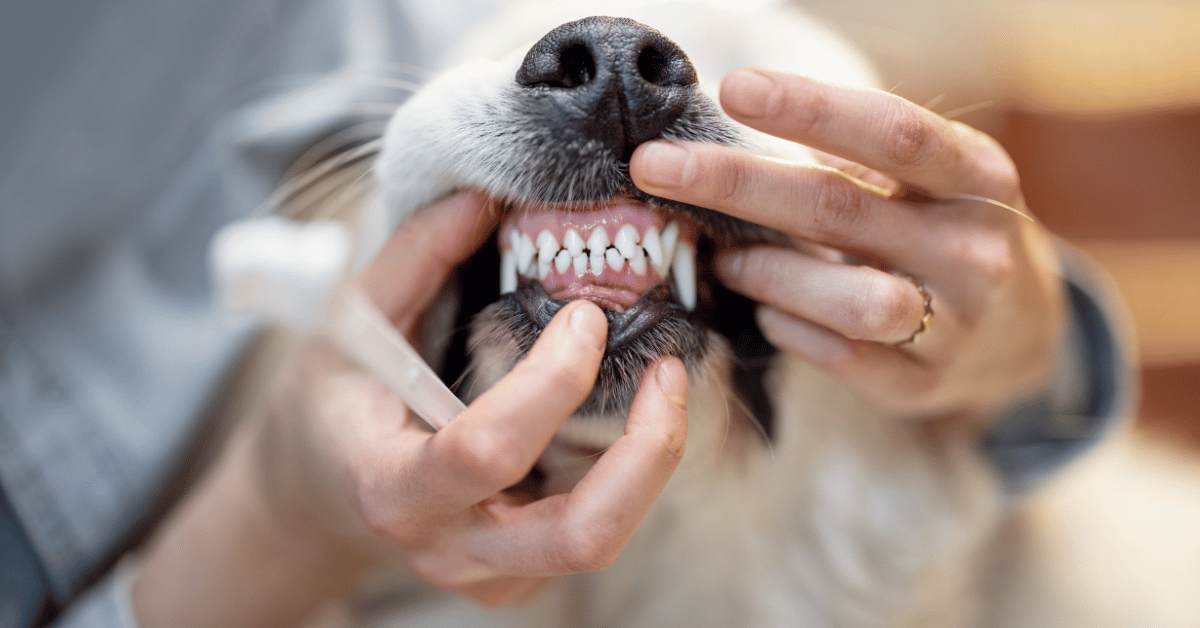
"Dog breath" is treated as a punchline — an unavoidable part of owning a dog, right up there with muddy paws. It is not. A healthy dog's mouth should smell like almost nothing at all.
When your dog's breath makes you turn your head away, that odor is coming from somewhere, and in the large majority of cases the somewhere is bacteria living under the gumline. The American Veterinary Medical Association puts it plainly: by the time a pet is three years old, they will very likely have some early evidence of periodontal disease.
Occasionally the smell is pointing at something else entirely — the kidneys, the liver, or diabetes. This article covers what causes bad breath in dogs, which home remedies are genuinely worth your time, and the specific smells that mean you should call rather than shop.
Why Does My Dog Have Bad Breath?
1. Periodontal disease (by far the most common cause)
Plaque — a soft film of bacteria — starts forming on teeth within hours of a cleaning. Within a couple of days, minerals in saliva harden it into tartar, the brown-yellow crust you can see along the gumline. Tartar cannot be brushed off.
From there the bacteria work downward, inflaming the gums and eventually destroying the ligament and bone holding the tooth in place. The sulfur compounds those bacteria produce are what you smell. The odor is, quite literally, an infection you can smell from across the room.
What makes periodontal disease deceptive is that most of it happens below the gumline, invisible during a normal look in the mouth. Teeth can look reasonable while significant disease is progressing beneath them.
Small breeds and flat-faced breeds are at higher risk, because crowded and rotated teeth trap more plaque. Our post on 5 ways to take care of your dog's teeth covers the day-to-day side of prevention.
2. Something stuck in the mouth
A splinter of stick, a fragment of bone, a piece of chew toy, or matted hair wedged between teeth will rot and smell within days. This is one of the few causes with a genuinely quick fix — but it needs someone to look, properly, at the whole mouth.
3. Oral growths, ulcers, and infections
Tumors in the mouth, infected tooth roots, and ulcerated tissue all produce a distinctly foul odor, often with drooling or blood-tinged saliva. Any dog with bad breath plus visible bleeding, facial swelling, or reluctance to be touched around the mouth needs to be examined promptly.
4. Diet and habits
Dogs who raid the trash, eat stool, or scavenge outdoors get bad breath honestly. This kind of odor comes and goes rather than being constant, which is a useful clue — persistent bad breath is a dental or medical problem, not a dietary one.
5. Metabolic disease — the smells that matter
Sometimes the mouth is fine and the breath still smells wrong. Three specific odors are worth learning:
Sweet or fruity, like nail polish remover — a possible sign of diabetic ketoacidosis. This is a medical emergency.
Ammonia, or like urine — associated with advanced kidney disease.
Unusually foul or musty, with vomiting or yellow-tinged gums — can point to liver disease.
If your dog's breath changes suddenly and smells like any of these, do not wait for a routine appointment. Call us or visit our emergency care [→ /emergency] page.
Why Bad Breath Is Worth Fixing, Not Masking
Periodontal disease is painful — dogs simply do not show it the way we expect. They keep eating, keep greeting you at the door, and rarely whine about their teeth. Owners routinely tell us their senior dog "got younger" after a dental procedure, which is really their dog no longer living with chronic oral pain.
There is a whole-body angle too. Advanced periodontal disease means chronic infection and inflammation, and bacteria from the mouth enter the bloodstream. Untreated dental disease has been associated with strain on the kidneys, liver, and heart.
So the goal is not fresher breath. The goal is a healthy mouth, with fresh breath as the side effect that tells you it worked.
Dog Bad Breath Home Remedies That Actually Work
Here is the honest ranking, most effective first.
Daily tooth brushing. The AVMA calls brushing the single most effective thing you can do for your pet's teeth between cleanings. Use a dog-specific toothpaste — never human toothpaste, which can contain fluoride and sometimes xylitol, both toxic to dogs. Start slowly: let your dog lick the paste for a few days, then touch the brush to a few teeth, then build up. Even a few times a week helps meaningfully.
Dental chews and diets carrying the VOHC seal. The Veterinary Oral Health Council awards its seal to products with real evidence of reducing plaque or tartar. That seal is the difference between a product that works and a product that markets. Match the chew size to your dog and supervise.
Water additives, as a supplement. VOHC-accepted water additives can reduce plaque and are easy to be consistent with. They work best alongside brushing, not instead of it.
Appropriate chew toys. Rubber chew toys and soft dental chews help. Avoid antlers, hooves, bones, and hard nylon — we see fractured teeth from all of them, and a fractured tooth is both painful and expensive.
Fresh water and a quality diet. Constant access to clean water helps rinse the mouth. Some prescription dental diets have a kibble structure that scrapes the tooth as the dog bites through it, which genuinely helps — worth discussing through our nutritional counseling service.
What will not fix it
Parsley, coconut oil, breath sprays, and mint treats do essentially nothing about the bacteria under the gumline. They perfume the exhale for an hour. If tartar has already formed, no home remedy removes it — only a professional cleaning does.
One more, more serious caution: avoid anesthesia-free dental cleanings. The AVMA does not recommend them, because they cannot clean or evaluate below the gumline where most disease lives, and they carry a real risk of injury to the pet. The result looks better and leaves the actual disease untouched.
When Bad Breath Means It's Time for a Dental Exam
Book an appointment if you notice:
Breath that stays bad despite regular brushing
Brown or yellow buildup along the gumline
Red, swollen, or bleeding gums
Dropping food, chewing on one side, or eating more slowly
Pawing at the mouth, face rubbing, or excessive drooling
Loose or discolored teeth
Facial swelling, especially under an eye
Any sudden change in breath odor, particularly sweet or ammonia-like
At Animal Care Clinic, a professional dental cleaning is done under general anesthesia, which is what makes it possible to clean below the gumline, probe each tooth, and take dental x-rays— the only way to see root abscesses and bone loss. We run pre-anesthetic blood work first and use monitored anesthesia with pain management throughout. You can read more about the process on our dental care page and in our guide to dog dental care best practices.
A note on senior dogs
Owners of older dogs often ask whether anesthesia is worth the risk. It is a fair question, and the honest answer is that age is not a disease — a well-screened senior with a painful, infected mouth is usually better served by treating it than by living with it. That said, the decision belongs in a conversation with your veterinarian, based on your dog's bloodwork, heart, and overall condition. Home remedies alone will not resolve a senior dog's bad breath if periodontal disease is already established.
Frequently Asked Questions About Dog Bad Breath
How do I get rid of my dog's bad breath?
Start with the cause. If it is early plaque, daily brushing with dog toothpaste plus VOHC-accepted dental chews will improve breath within a few weeks. If tartar has already hardened onto the teeth, no home remedy will remove it — a professional dental cleaning under anesthesia is needed, after which home care keeps it from coming back.
Should I be concerned if my dog has bad breath?
Yes. Persistent bad breath is the most common early sign of periodontal disease, which is painful and progressive. It can also point to kidney disease, liver disease, diabetes, or an oral tumor. Breath that is genuinely offensive is worth an exam rather than a breath treat.
What is the best dog treat for bad breath?
Look for the Veterinary Oral Health Council (VOHC) seal, which means the product has demonstrated a measurable reduction in plaque or tartar. Choose a size appropriate for your dog, supervise chewing, and avoid antlers, hooves, and real bones — they fracture teeth.
What does kidney failure dog breath smell like?
Typically like ammonia or urine, caused by waste products building up in the bloodstream. It is usually accompanied by increased drinking and urination, weight loss, poor appetite, and vomiting. A dog whose breath develops this smell should be examined promptly.
Can I use human toothpaste on my dog?
No. Human toothpaste can contain fluoride and xylitol, both toxic to dogs, and dogs swallow toothpaste rather than spitting it out. Use a toothpaste made for dogs, which is designed to be swallowed and usually flavored to make brushing easier.
How fast can bad dog breath be fixed?
If the cause is a stuck object or mild plaque, improvement can come within days. If periodontal disease is established, breath usually improves dramatically within a week of a professional cleaning. There is no true overnight fix — anything promising one is masking the odor, not treating it.
Fresh Breath Starts With a Healthy Mouth
If your dog's breath has you leaning away from the greeting, it is worth ten minutes of a veterinarian's attention. A dental exam is quick, and it often finds something treatable that has been quietly hurting your dog for months.
Call Animal Care Clinic in Junction City at 785-762-5631 or request an appointment to schedule a dental exam. We have been caring for Junction City pets since 1975, and dental health is one of the places where a small amount of attention pays off for years.